Booze Britannia
On pints, people, and the peculiar poetry of the British boozer.

The British pub occupies a near-mythic status: equal parts community centre, confessional box, and comedy club. Forget Rule Britannia - it’s more Booze Britannia. The pub remains Britain’s truest stage. If you think the Irish love the pub, the British will happily claim they love it more. Yet could the British pub really be different from its Irish counterpart? Though the two may be close cousins, there remains a divide between them - one far wider than the Irish Sea.
What greeted me in Britain was a hodge-podge mix of pubs: some with less soul than the people inside them, others patrolled by bouncers, and, believe it or not, many boasting a menu. This ain’t like the pubs at home. Perplexed by what I found, I began seeking out another kind of establishment altogether - a true boozer.
Having moved to Albion, the call of the alehouse has been hard to ignore. And what a call it’s been, though less dial-up and more dialled-out, I’d admit. Still, I think I’ve managed to find the pint-pouring pariah: the boozer. An institution of ale, a shrine to Stella, a homage to how things ought to be, not merely should be. Yet in a time of shifting drinking habits and mounting economic pressures, the future of the boozer has never felt more precarious.
The average British pub, the kind with names that sound like rejected medieval mascots: The Red Lion, The Queen’s Head, The Fabled Framer, or something gloriously absurd like The Jockey’s Bollocks, don’t exactly entice me. I’ll drink my sub in a boozer please. I don’t claim to have unearthed the phenomenon of the boozer; it long predates me and, hopefully, will outlast both me and my liver.
Its etymology stems from the Middle English word “bousen,” meaning to drink heavily, so as long as the taps keep pouring, they are unlikely to be pushing up daisies anytime soon. But hold on, with a hospitality sector as shaky as your aunt after her third glass of pub measure Sauvignon Blanc, where does the future of the boozer lie?
First things first, it’s time to get out of the contemporary pub and back into the boozer. Let’s get back to Bass tacks. Pun wholeheartedly intended. Fuller’s pubs are full of shite, a pint in a Young’s leaves you yellow-bellied, and you wouldn’t catch me dead in a Wetherspoons. I’ll take my money to an institution, not an imitation. I certainly won’t give it to a man who didn’t pay his workers during a pandemic or backed a Vote Leave campaign.
But as boozers close, will we all be wandering into Wetherspoons? What an apocalyptic nightmare that would be. Forget the River Styx, that’s more a river of apple sour shots, Bud Light, mushy peas, and table-served pints with no head. Whoever invented the Wetherspoons app surely has to meet their match at the white pearly gates. Yet each day a pub in the UK closes, and as economies of scale eradicate pillars of communities, it begs the question: is it last call for the boozer? I beg to differ.
Pubs like this are parish halls where you can get a pint, not private equity speculation sites. In a saturated market of shiny, glistening taprooms, ones too clean for characters and not rough enough for roudyness, the boozer stands defiantly as a uniquely British phenomenon, and proudly outside the fold of corporations. They are a place that shouldn’t be victimised or shunned, let alone forced out of business. Who’s next there gents? Never mind, no one would call you a gent in a boozer.
Yet how do you know when you’re in a proper boozer? Over the course of a hurried two pints at The Devereux, just off Fleet St in London, I sat down with Niall from the aptly named Instagram account Proper Boozers. Niall is the son of Irish publicans who landed in London in the 80s from Meath. His project was born out of a desire to document and celebrate the quintessential boozers that we both hold so dearly - the kind of places where character, history, and a pint of something decent still rule the roost. Together, we compiled a checklist of what makes a proper boozer.
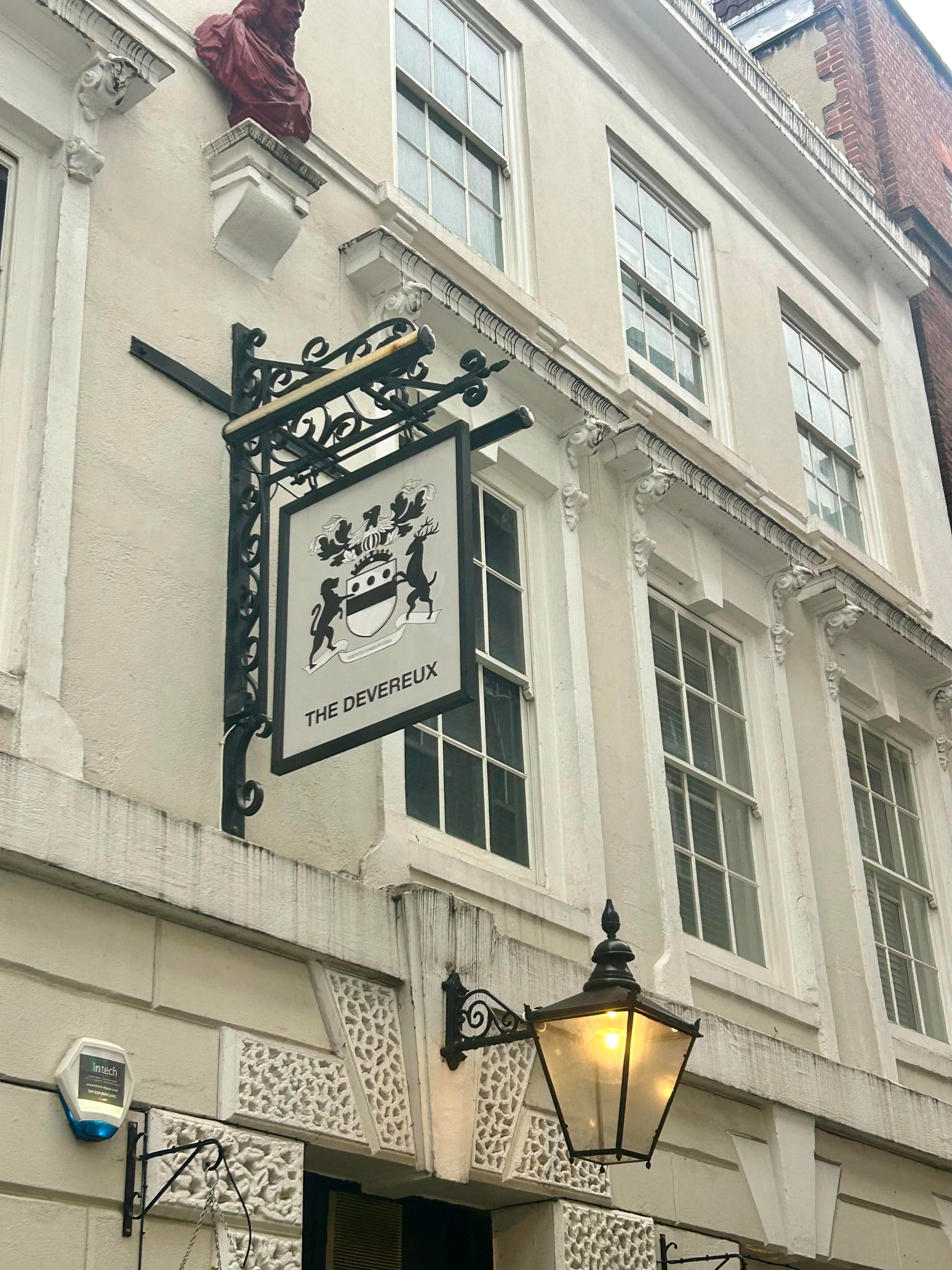
Niall was quick off the mark to lay down his criteria. A proper boozer usually has a scuffed-up hardwood floor. One that sandpaper could only dream of replicating. A jumbled yet aptly stained carpet is always appreciated. It goes without saying that these pubs aren’t part of a chain. The sole proprietor makes up for the lack of soul that a franchised pub can’t avoid. A place passed down from generation to generation is also desirable, though not essential. That should suffice. One can’t be too critical. A critic, after all, is a man who knows the way but can’t drive the car. And I do hope you’re not driving home after being to a boozer.
The drinks selection certainly shouldn’t include any bullshit IPAs or craft beers. British-brewed Spanish lagers over BrewBog any day of the week. The spirits selection is simple yet fervent; cask ales a bonus. Here, cocktail hour ended before the invention of the sundial. No food bar exists, except for the modest offerings of pork scratchings or scampi fries - maybe a toasted sandwich if you’re feeling upmarket. It’s dimly lit, except for the occasional glow of a cash-only pokies machine. Now that’s what makes a boozer.
Cash is king in most of these places. I’ve always had a particular kind of quiet satisfaction paying in notes or coins. Hush, hush, HMRC doesn’t need to know about this one; let’s keep it under the table. Niall’s account began with £20 in his pocket and a desire to catalogue the boozers in his area. And being the son of a publican, there’s no better adjudicator. The boozer rewards that kind of knowledge: the knack for reading a room, the small courtesies and the unspoken code of conduct.
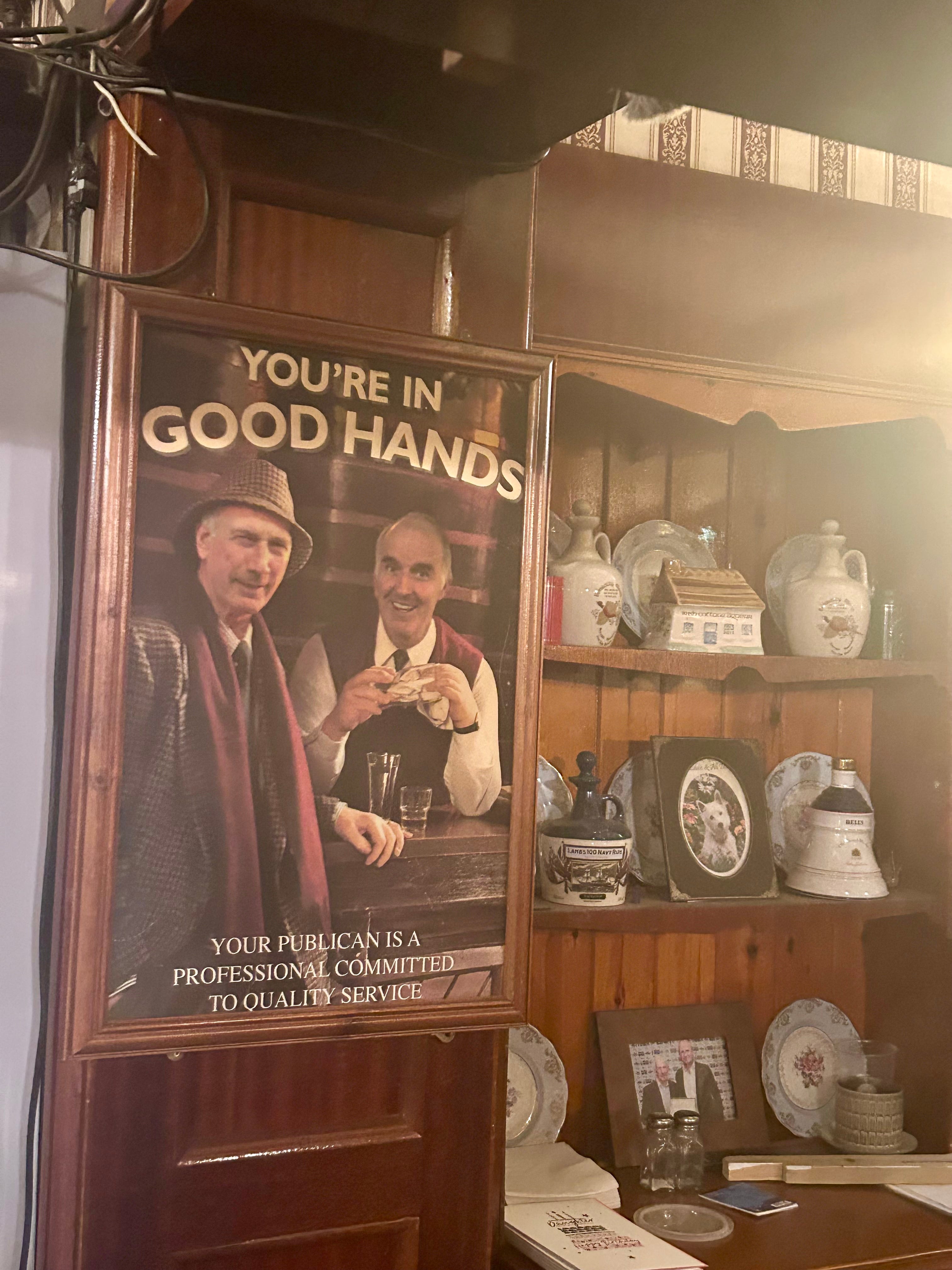
My new local, The Hercules on Holloway Road, N7, draws its line somewhere between a boozer and an Irish pub. To quote a barside fixture, “It lures you in with the hanging baskets”. Then it reveals its true character through the characters inside. This said, it hasn’t failed me yet. Offering a £5 Guinness, now a rarity in London, it sits somewhere between a Sligo nursing home and a Soho alehouse, and I mean that as an endearing compliment. There’s a special level of sociability in these places. With third spaces becoming harder to find, pubs like this certainly add a third dimension to the lives of those in the local community and those who drink there.
Having recently attended their Halfway to St. Paddy’s Day celebration, complete with Amhrán na bhFiann and a blotto style raffle, it brought home the role these places play. Among the platters of cocktail sausages and the free-poured Jameson lies the true spirit, spite, and solidarity that keep them alive.
Having shunned Irishness and the boozer at the beginning of my ramblings, there remains an Irish connection in many of these boozers. Whether it’s in Cricklewood, Camden Town, or Finsbury, that familiar accent never quite fades - it occasionally pricks the ear. Pub names like The Floirín, The W.B. Yeats, and The Halfway House catch the eye.
I suppose it shows that the boozer and the Irish pub might be more interconnected than I first thought. Many are run by second- or third-generation Irish families, descended from those who arrived in Britain with only a few job options: work on the sites as navvies, or become publicans. Stick to what you know and what you’re good at, I suppose.
But it’s not just the accents or the names that linger; it’s an atmosphere. Step inside any of these places and you’ll feel it - that gentle or not-so-gentle hum of conversation, the easy nods between strangers, the quiet comfort of being somewhere that doesn’t demand anything of you except your presence. The jukebox might play Britpop, not rebel ballads, and the Guinness might share a tap with John Smiths, but the heart of the place doesn’t change. Nor should it. Boozers are living archives, holding stories of graft, laughter, and loss - all poured and shared across sticky counters and timeworn stools.
Perhaps that’s why the boozer endures, and long should it. It’s not simply a place to drink, it’s a place to belong. It’s where strangers become regulars, where arguments and laughter spill as freely as the drink itself, and where history harbours softly beneath the clink of glasses. The boozer may be under threat, but its spirit remains stubbornly on tap. For all our talk of progress, perhaps what we still crave most is a familiar face behind the bar, and the comforting certainty that last orders never quite mean goodbye.
Excellent piece 👏👏